
1. Consider the transition from Step 1 to Step 2 in the three-step model above: Can you think of three (3) non-spiritual, non-religious, non-supernatural reasons why humans might have started to bury their dead? How might the burial of dead have benefited a human population for non-belief reasons? Explain fully. (12 pts)
Three standard suggestions all have to do with issues of safety and livability of the territory of early humans:- Safety from predators/scavengers - Dead bodies attract animals who can hurt the living. Burial of bodies removes this threat.
- Disease - If the person died from a contagious disease, burial can help protect the living from the spread of this disease.
- Dead bodies are not fun to have around - Dead bodies are unpleasant. They draw flies and other insects. They bloat up and can explode with rot. They start to decay and stink. To make life comfortable for the living, burials of bodies would take this our of the living space.

Other suggestions include a "marking territory" idea where burial lets outsiders know that this territory belongs to these people. A possibility, but unmarked/unmanaged graves get taken over pretty quickly nature and are difficult for people to see. A better alternative might be the native American (Sioux and Blackfoot) practice of "burying" their dead on tall platforms. Those are harder to miss when you come across them.
So we don't need belief systems in order to benefit from burial of bodies. We can do so for biological and survival reasons. So when did belief systems start to come into play?
2. Consider the transition from Step 2 to Step 3 in the three-step model above:
Recognize that there was a mental/intellectual transition from “burial”
to “burial with material goods”. Why would people start to include
material goods in the burials? What can it tell us about their thinking
and what questions they may have been asking about the process of death? (8 pts)
A lot of students got bogged down in the concept of burial goods and skirted the issue of how the practices arose in the first place. Since we have demonstrated that we don't need belief systems for simple burials, we need to step back and work through the thought process that resulted in adding grave goods to burials.
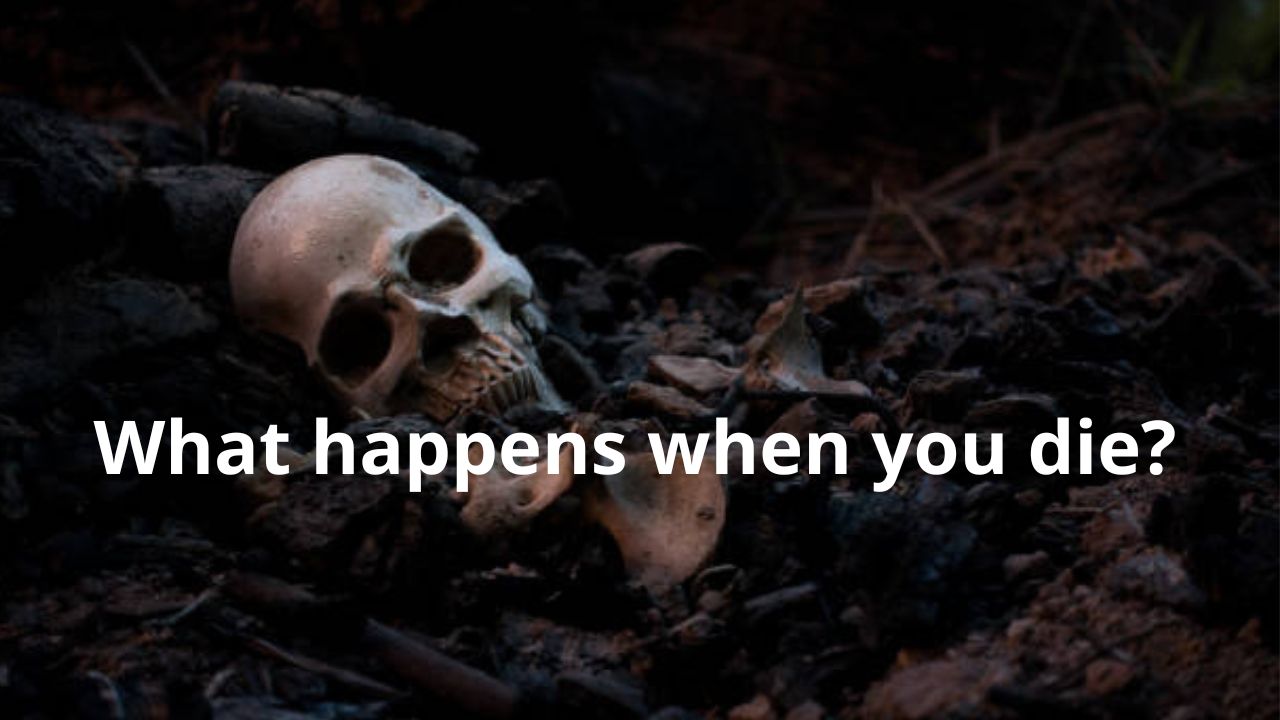
When early humans were burying their dead, they were also likely mourning those who have passed. It's clear from the examples provided above that belief is not necessary to bury the dead. We can do that for issues of biology and survival. But while we were burying our dead, we were also *mourning* them, and it is this psychological process that caused us to start asking questions... such as "Why do we die?" and "What happens to us when we die?" This indicates that there is recognition that the process of death changes the individual in a way that removes what made the person who they were. Humans likely started asking questions about that process, wondering where that "essence" that made that person has gone. That is actually a big cognitive transition and is important to recognize. It was likely this thought process which eventually led to the addition of grave goods during burials.
3. Refer back to the questions(s) you identified in the last prompt
(#2). What possible answers (hypotheses) did early humans develop to
these questions? How are these answers reflected in their burial goods?
(5 pts)
There are two primary answers to the question of "what happens after a person dies".
(1) They just no longer exist. They are just gone.
(2) They continue on elsewhere.
Which would be more comforting to those left behind? Death is uncomfortable and difficult for the survivors. It would make sense that opting to believe those who have died aren't just *gone*. It is comforting to think that part of them still exists elsewhere. This could explain the origins of the concept of an afterlife.

4. Think back to your answers in the prior prompts. How does this reveal a possible function for early belief systems? (5 pts)
Humans don't do well with the unknown. We want to understand things that can impact us and those around us. This can include other issues besides death, such as why the rains haven't come and the plants are drying out, or why an animal herd has shrunk in size, or why the snows were more severe this year and negatively impacted the community. But death is the "ultimate question" and all humans struggle to deal with it across cultures. To not know what happens after death makes people horribly uncomfortable. A belief system steps in and alleviates that discomfort. Belief systems function to answer the seemingly unanswerable to reduce anxiety and calm the community.

5. Can you identify any other species of organisms who practice burial of their dead? If so, briefly describe your example and provide a link to an online source. Does this mean those non-human organism have “belief systems”? Explain your answer. (5 pts)
While there are not a huge number of non-humans who practice burial (scavenging and predation tends to remove the danger of a dead body in a non-social population), elephants have demonstrated this practice. They, along with many other organisms, also exhibit *mourning* behavior, and keep in mind that it is this process (more so than burial) that connects humans to their belief systems by answering questions about death. While we do not as yet have scientific evidence that non-humans have belief systems, the fact that they DO mourn their dead opens a door to the possibility that they do. This would be difficult to test due to the lack of communication between humans and non-humans.
I am intrigued by the success of teaching gorillas and chimpanzees to use sign-language. We now know we can teach some apes to creatively use the ASL system of communication to speak beyond their basic needs and explore more complex ideas. Koko the gorilla was famous for having a huge ASL vocabulary and carrying on long conversations with her human caregivers. She had a kitten that was tragically killed by a car. Koko's caregiver's did talk to her about how she felt about this, using signs for "cry" and "bad, bad, bad" to express her grief. That tells us this conversation could happen. I suggest this might be the door to testing the hypothetical question: "Do non-humans have belief systems, particularly with regard to death?"
Link for examples: https://www.bbc.com/future/article/20120919-respect-the-dead


No comments:
Post a Comment