
1. Before you read the assigned article, what were your initial (and personal) thoughts regarding the concept of “senocide”? This should reflect your personal feelings and thoughts. Don't worry about needing to sound like an anthropologist for this prompt. ( 5 pts)

My perspective on this will be different from most students as I am older and have had different life experiences. Some background first:
Both of my parents have passed away, my father before the pandemic and my mother a few years after the pandemic, so about 7 years apart. My mother’s death was brought on, in fact, by a bout of Covid that damaged her heart and lungs and made it difficult to oxygenate her body. Her mobility was limited, her thinking became unclear, and she struggled to find joy in her life, making her final years difficult for her and for her loved ones.
My father’s death was worse.
My father was a Professor of Biology for his entire adult career. He took great joy in teaching, arguing, engaging and debating with students. He loved to play “devil’s advocate” just to see a student get fired up and argue back! He developed an incredible ecology summer program for the University on a dude ranch in Yellowstone (that is still running!) which explored the geological, ecological and philosophical issues surrounding the recovery of the park from the fire that roared through it in 1988. I am certainly biased, but he was a brilliant man and contributed much to the education of the students who were lucky enough to cross his path.
So it was especially cruel for him to ultimately suffer his decline due to dementia, which first took his ability to communicate, leaving his thoughts intact but his ability to say them eradicated. You could see in his eyes that he knew what was happening to him but he had *no power* over this disease. He was helpless as it continued to lay waste to his brain and then his body. Before he descended too far, he and I talked about the tragedy of our modern medical system that prevented people like him from legally opting for assisted suicide to avoid the degradation and dehumanizing experience he was facing. He would have opted for it had it been allowed and I would have supported him.
With that experience, I was not horrified by the idea of senocide, with the stipulation that I could not have actually ended my father’s life. I would, however, welcomed the chance to help him find a way to end it himself through medical intervention.
Note before going further: I would like students to consider a lot of these questions not just from the perspective of the culture or the family, but also from the perspective of the person who is actually dying. Reach for empathy here and try to understand what they might be experiencing, both good and bad, as well as the beliefs that might be driving their actions.
2. What personal experience was the author enduring that at least in part drove him to explore this traditional Inuit death practice? (5 pts)
The author had just helped his grandparents transition into a health care facility. They were no longer able to live on their own and required care. While the author felt some relief that his grandparents were cared for, the transition was difficult and they were struggling to accept the changes, as was he. When the opportunity arose to conduct this research, it was both an issue of being a related topic AND a chance to step away from the stress of watching his grandparents live in their new “normal”.
3. Using information from the article, describe the *indigenous* beliefs (before the introduction of Christianity) of this population of what happens to a person after they die. (5 pts)
The traditional Inuit beliefs viewed death as a transition of the soul from life to the afterlife. There were two options for an afterlife based upon how a person died. If a person died slowly from illness, they went to a place called the Narrow Land, located beneath the ocean. This was a form of purgatory. People who died quickly (and often violently) went to the Land of Day, located in the sky, which was described as a happy place where souls could enjoy themselves. You can see how this would appeal to a culture that valued bravery in the difficult environment where hunting for large mammals could be dangerous and result in the quick and violent deaths of hunters. But it could also apply to those elders who opted to end their own lives once they felt they were not longer productive members of society. Those in the purgatory of the Narrow Land could barter their transition to the Land of Day by confessing their wrongdoings.
4. In the article, anthropologist Frédéric Laugrand is quoted as saying, “There was no scandal of death; that is a Western idea,” in relation to the concept of death in the Inuit. What does he mean by the use of the word “scandal” and how is that reflected in the attitude toward death in other belief systems, such as Christianity? Explain how the traditional concept of “death” in Inuit populations is different. (5 pts)

"Scandal" implies something is wrong. In Christianity, death is to be avoided. It is the cost of sin, a form of punishment. The quote explains that there is nothing wrong with death. It is not something that should be whispered about nor should we try to avoid it when it occurs in the natural process of a lifetime of aging. It is the end of one life and the beginning of another. In this, Christianity and the Inuit practices agree, but still, death was welcomed and valued among the Inuit. Even though Christians believe they will be going to a good afterlife after they die, they still consider it something to dread and avoid.
5. Explain why aging Inuit in former traditional populations might request to die. Is this action viewed as a positive or a negative process among Inuit? (5 pts)

Inuit Death Mask
When an Inuit Elder recognizes that he or she is no longer able to feel like a contributing member of the society, they could request that their family help them end their lives. This is viewed in the positive among traditional Inuit populations. This practice allows the population to invest limited resources only in contributing members of the population. It also prevents a slow death (and ultimately purgatory) by the Elder. The person who is dying is able to take power and control over the end of their lives, which is not common with regard to death. It is possible that those facing the end of their lives amongst the Inuit feared a slow death and purgatory more than the idea of a quick death, which helped drive the practice.
6. Modern Inuit populations have stepped away from this practice of senocide. Is it reasonable to consider that the adoption of Christianity (albeit an indigenous form of the belief system which may be viewed as “syncretism”) may have influenced this transition? (5 pts)

Christianity opposes any kind of suicide. That is what "senocide" is in its traditional practice. It is an elder (or sick person) voluntarily ending their lives.
So, given that information, if a elder's family no longer believes that taking your own life is "good", but instead now a "sin", wouldn't that push for the end of this practice? Suddenly, that type of death is indeed a "scandal" and forbidden. Imagine being an individual raised in traditional ways and now having to age without that 'out' at the end of your life. Think about what that does to their mental health to be caught between two different belief systems, the old and the new.
Note that this question isn’t assuming Christianity is the ONLY influence changing this culture, but it is certainly an important one that we must consider.
7. Earlier in this course (Chapter 6, Section 6.15), we explored the work of Robbie E. Davis Floyd who argued that the process of birth in Western societies have become “ritualized and medicalized” and suggested that this benefited the medical community (localizing the process of birth in their place of work) but to the possible detriment of women. Now consider the modern approach to death in the Inuit as compared to the traditional practice of senocide. Who benefits from this evolution of modern practices? Is the process of death now easier for the dying or their families? Explain your answer. (5 pts)
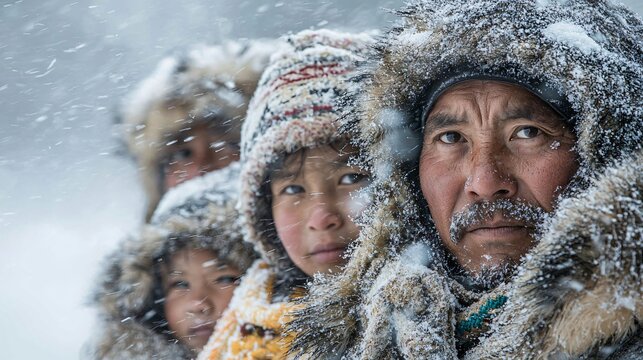
There are three parts to consider here: the medical community, the family, and finally the person dying.
The medical community benefits from this process as it centralizes and standardizes the process of death. Doctors don’t have to make house calls, pain and discomfort can be managed with medication, and end-of-life treatment is non-violent and relatively controlled.
The costs and benefits to the family are a mixed bag. The care for their loved one can now be put into the hands of professionals, and perhaps the family can feel some relief that they don’t have be entirely responsible for making decisions for their dying loved one. They can rely on medical professionals to guide them. But there are costs as well, and not just steep financial ones. Their loved one is not living with family and they are enduring a slow, long death which is not entirely made better through medication and treatment. The person who may have raised them and taught them is now helpless and dependent, not at all the person they remember. This slow death can be just as painful (and possible MORE difficult) than a quick death.
Finally, the person who is dying must be considered. Yes, they can receive medication and care and treatment, but they are still dying. So, some questions to consider:
- Is a death that is "medically managed" actually *easier* for those raised under the traditional practices, with beliefs of the benefits of a quick death?
- It is easier because drugs can be given to numb a person or ease pain?
- It is easier because the death process is dragged out longer?
Unless they have dementia or some other mental incapacitation, a person who dies a slow death away from family will likely be well aware of that they are dying, well aware that their body is failing, and that they are being cared for by strangers, not family. In a way, it is like the "Narrow Land", a kind of purgatory. They will also be aware that they are *powerless* to do anything about this. Their *power* over their life has been removed from them and given instead to medical personal. Consider just how NOT "easy" that would be for the individual.
8. Do you think the author’s view of Inuit senocide practices evolved over the time of his study? Offer evidence from the article which backs up your answer. (5 pts)

The author's attitude toward senocide definitely changed over the process of this research. Not only did the author learn to see death and dying in a different light, he was given the ability to *empathize* more deeply with what his grandfather was enduring, and that is a significant change. This practice of senocide gives that person *power* over their life. That is something the author's grandfather is not being granted. I suggest THAT is the message the author is trying to communicate here... the question of whether the medicalization of death has truly helped the dying, or if it just makes those around the dying individual feel like THEY have some control over the death process? It transfers power from the person dying to the family and doctors who now control the process. The author mourns his inability to grant his grandfather the quick death he would probably prefer and sadly recognizes that the culture of his grandparents do not account for what might be perceived as a preferable way to die.


No comments:
Post a Comment