"Sensei, do you go to heaven when you die?" "No... Bhuddists have no where to go."

Sunday, August 9, 2026

Week 5: Applied Anthropology and the Middle East


1983 Israeli-Lebanon Peace Treaty that collapsed a year later.

The Arab-Israeli conflict is a regular part of our news cycle and has been for decades.  The conflict occurring in the Middle East between Israel and its Islamic neighbors has been ongoing since long before the UN partition plan for Palestine and the declaration of the State of Israel on May 14, 1948, but that event certainly intensified the conflict.

Even as a college student, I was aware of it but not knowledgeable.  It seemed to me that leaders would step in to try to solve the conflict, there would be a short period of hope, and then the conflict would arise again.  With my focus on school and family and life in general, I didn’t take a deep dive into trying to grasp what was happening there.

The Oslo Accord of 1993

 A few years later, I picked up (just on a lark) Thomas Friedman’s book “From Beirut to Jerusalem” in the hopes that it might offer some insight into events there.  The book covers the span of time when Friedman lived and worked in Beirut, Lebanon and Israel and also covered some history of the region to lay the foundation for the book.


The book was fascinating but also depressing, as I walked away from it with a far better understanding of the source of the ongoing conflict but also the impression that the differences that were creating this conflict were seemingly insurmountable.  I could not envision a solution that would bring about peace.

I remain hopeful that future generations might prove me wrong, and would argue that cultural anthropologists could play an important role in successfully bringing about a peaceful solution to this longstanding conflict.  That’s where you come in!


But first some background:  There are some key issues that I suggest make a solution extremely difficult to generate, and surprisingly, it has less to do with a conflict between the two faiths (Judaism and Islam) and more to do with other factors.

1.  The “Tribal” Nature of Traditional Islamic Populations:  Friedman does a great job of explaining the difference between the two primary sects of Islam, namely the Sunni and Shia.  The split between these two groups is traced back to 632 AD with the death of the Prophet Muhammad.  Sunnis argued that leadership should be elected. Shia favored leadership remaining within the descendants of Muhammad.  The two groups generally share most beliefs and practices of Islam, but this disagreement in determining leadership almost 1400 years ago produced this significant split within Islam that remains today.

Aside from this primary divide, the traditional Muslim populations were nomadic pastoralists, managing herds of camels, sheep, goats, and yaks. They were not centralized but broken into many migrating tribes, following herds where they needed to go for food and water.  There are many different tribal groups, including (but not limited to) the Bedouin, the Tuarag, the Fulani, the Kuchi, the Kyurgyz, and the Bakhtiari, all with their own cultural practices and language.  (More readings on this here.)


The result?  A highly diverse population in practices and beliefs.  That by itself is not a bad thing… unless a situation arises where it might be to their advantage to increase their power by speaking with one voice.

2.  Enter the State of Israel:  With the advent of the State of Israel by the UN in 1948, a territory was created where a predominantly Jewish population was led by an organized central government who spoke for that population.  This centralized government collected taxes, built a military, and established global relationships with other powerful governments of state, including the US and European nations.


So, the problem:

  • On one side you have a large decentralized population of tribal units (even if they are cobbled together into countries with central governments) that do share a generally common faith (Islam) but who have their own unique priorities and goals for their people.  They may actually have conflict between these tribes stemming from ongoing competition for resources in a dry climate but also from historical religious differences (Sunni and Shia).  Some populations have positive relationships with other non-Islamic countries.  Others do not.
  • On the other side, you have a centralized state government that is predominantly Jewish, well-organized and well-funded, who has established connections with other powerful and well-funded governments.

Can you see how resolving the conflict between these two populations might be nearly impossible due to their inability to speak the same “language”, with the recognition that this could apply to their linguistic language but also their cultural language, their religious language, and their geopolitical language?  You have two populations that differ in so many different ways (Jewish vs. Islam, Hebrew vs. multiple language bases, tribal vs. state governments, Jewish culture vs. multiple cultures arising from nomadic pastoral Islamic histories), it should not be a surprise that they cannot find enough commonalities to find a way to work towards a mutually beneficial peace process.

This is where I think anthropologists (using applied anthropology) could help.  You cannot solve problems by ignoring differences.  You need to acknowledge those differences, understand them, and then work to find shared cultural goals that could lead to a peaceful solution.

So here’s your prompt for this discussion:

Imagine that you are a cultural anthropologist who is part of a team analyzing this Arab-Israel Conflict in search of a solution.  As an anthropologist, you are putting your own beliefs and biases aside to the best of your ability.  You have two options for a response:

1.  Do you see a possible path forward in this conflict that could allow these two diverse populations to talk to each other in spite of their differences?  There is no time limitation on this and you have free range to imagine any solution, even if it involves a long-term change in governance or political relationships.  The only restriction is that the solution must be in the realm of the real world, i.e., no “magic” or “miracles”.

2.  Perhaps you don’t see a path forward for a peaceful solution.   Explain why you think the conditions of this conflict bar a possible solution to this conflict from a cultural anthropological perspective.

I recognize that this may be an impossible situation and I’m asking you to consider a solution to a problem global governments have not been able to solve.  But you have the freedom to think outside the box on this.  Stretch your brain a bit for this discussion.  Your initial comment is worth 10 pts (different from prior discussions) and a critical response to another student is worth 5 additional points.

Sunday, August 2, 2026

Week 4: How Healthy is Your Social Capital?

 https://m.media-amazon.com/images/S/compressed.photo.goodreads.com/books/1424632781i/478.jpg

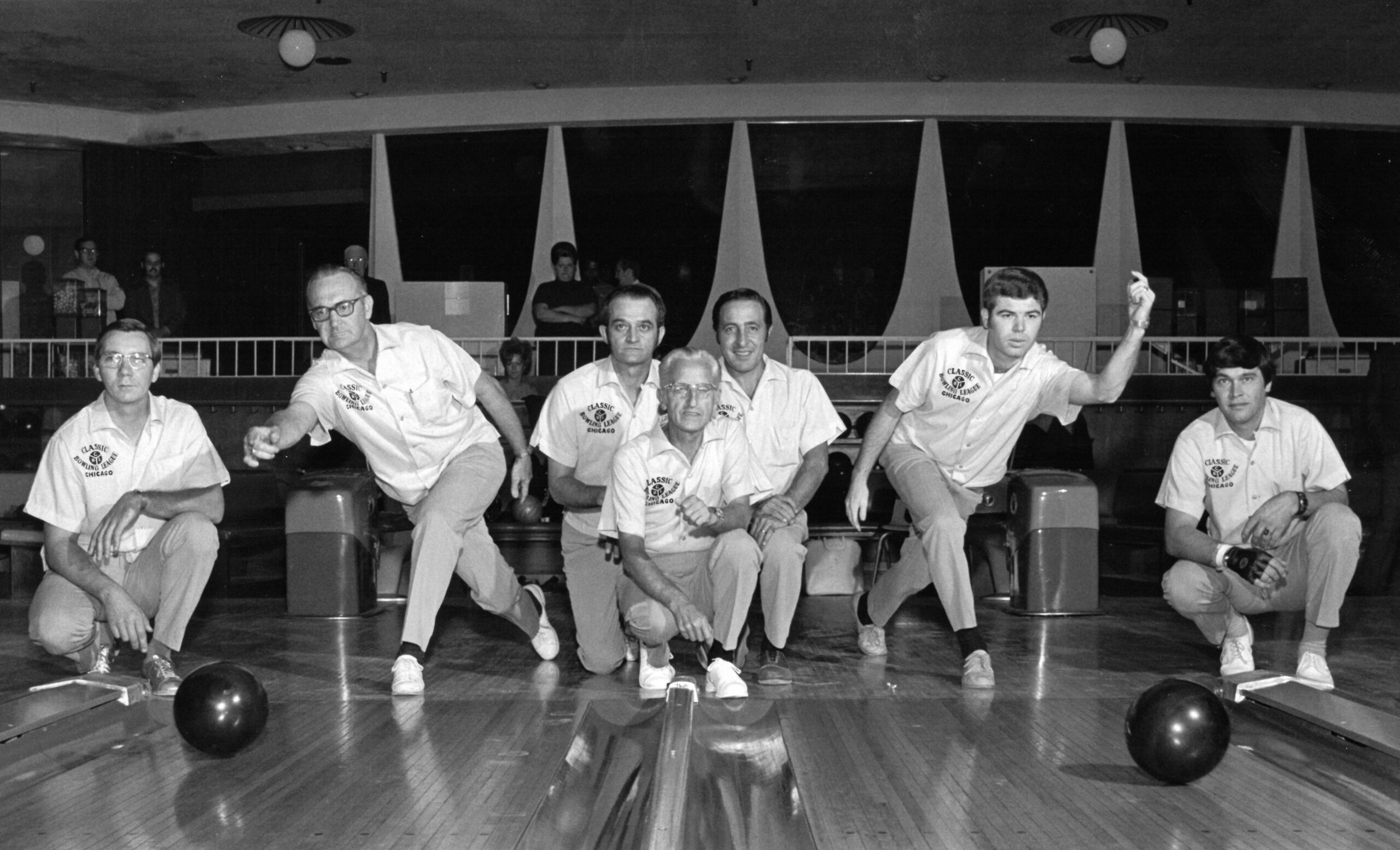
In 2000, a man named Robert Putnam published a book called “Bowling Alone”.  It summarized and expounded upon his extensive analysis of what he saw as a decline in American society from the 1950’s onward that he described in terms of three different categories:

  • Political Participation: He noted that voter turnout and participation had dropped precipitously since it’s height in the 1950’s.
  • Civic Engagement: He noted plummeting membership in organizations like labor unions, the PTA, and the Red Cross.
  • Informal Socializing:  The practice of hosting dinner parties was starting to disappear, along with formally common behaviors that helped a person know their neighbors.  Even socializing with extended families was in decline, and this was well before the advent of cell phones and streaming networks.


Why was this a concern?  Because the presence of those practices at higher levels coincided with the rise of the middle class in the post-WWII rise of the middle class in the US, starting in the 1940s with Roosevelt’s New Deal.  With this expansion of this middle income group came a rise of productivity, education, and welfare across the nation.  It is said that “a rising tide lifts all boats” and this seemed to be true as the improvement in the success of the middle class also led to increased wealth of the affluent and also drew more people out of poverty.  It drove innovation and scientific advancement, producing such things as the path to the digital revolution, astounding medical advancements and man’s first step on the Moon.

Was the decline in political, civic and social engagement reversing this trend?  Putnam’s analysis seemed to suggest this was having a negative impact on that critical middle class (sinking the boat, so to speak), so he set about trying to figure out what was happening.

What he found is that there seemed to be a connection with this decline and the parallel decline in people “joining” various groups… such as bowling leagues.


Not sure if anyone here is old enough to remember this, but throughout the 1960’s and 1970’s, bowling was *huge*.  Everyone who was anyone in the middle class belonged to a bowling league and bowling alleys were as prolific in communities as coffee shops are today.  Bowling leagues were not just fun.  They allowed people to socialize, to get to know their neighbors, to catch up on gossip, and to track changes in their community.


 But Putnam argues that something even more important arose from groups like bowling leagues:  Social Capital.


Putnam defines “social capital” as:

“a wide variety of quite specific benefits that flow from the trust, reciprocity, information, and cooperation associated with social networks. Social capital creates value for the people who are connected and – at least sometimes – for bystanders as well.”  (http://bowlingalone.com/?page_id=13)

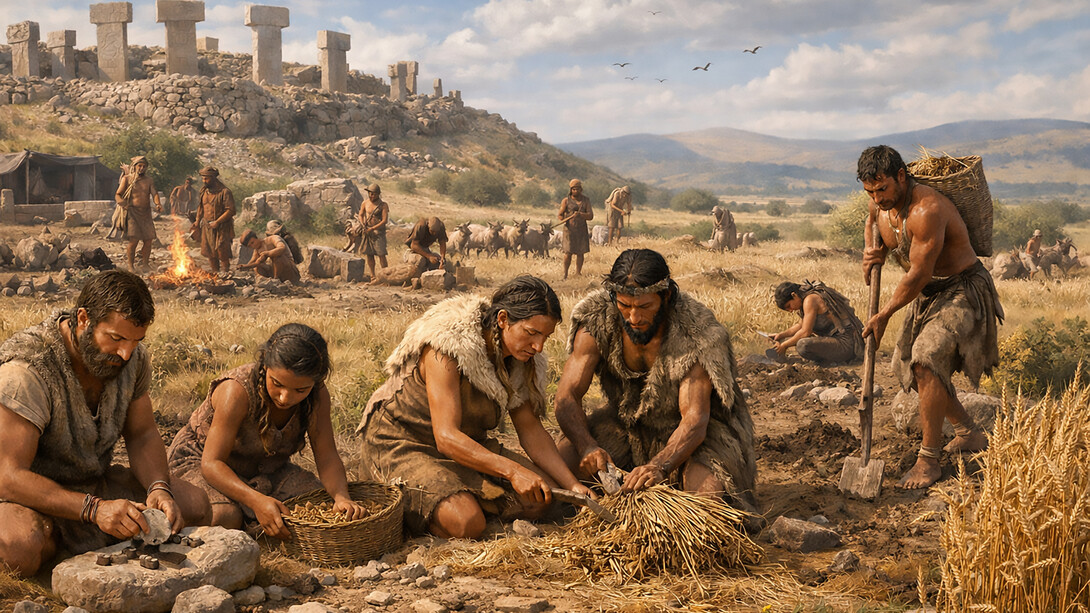
Humans are social creatures by necessity.  We can NOT live alone in this complex and sometimes dangerous world.  We need people for protection.  We need people to gather resources.  We need people to help build shelter.  We need people to reproduce.  And we need people emotionally for our mental health.  That’s just how we are built through evolutionary processes. Individuals who were good at building their social networks (even in pre-historic times) were more likely to survive and pass on their genes to the next generation.

A reconstruction of life near Göbeklitepe 10,000 years ago, showing early communities cooperating with stone tools during the transition toward agriculture
 

There was another advantage to social networks:  If you demonstrated that you were trustworthy and reliable, that people could count on you, that raised your “social capital” which you could “spend” by asking others for help and support.  Think of social capital like a form of money.  As you helped others in your community, you earned social capital.  When you need help, you can use the social capital you have earned in exchange for support and assistance.  And, just like money, you can lose or waste your social capital by being *untrustworthy*.  If people can’t count on you, your social capital drops and you are isolated.

 So what concerned Putnam was that the drop of “joining” groups like bowling leagues (and many other examples) represented a decline in the circulation of “social capital” in society, leading to people’s isolation and reducing everyone’s success across the board.  This (at least in part, according to Putnam) was leading to the disturbing drop of the success and welfare of the US middle class.

If you wish to know more about Putnam’s seminal work, a more recent documentary has been produced called “Join or Die”.  Unfortunately, it is not freely available (although it was on Netflix earlier this year and may be available on other streaming services).  The producers encourage this video be viewed “socially”  (which makes sense) and communities can organize viewing parties.  More info here:  https://joinordiefilm.com/about/

So how does that relate to this course?

We’ve been spending a good portion of this course so far trying to understand the *function* of belief systems.  Could “social capital” be pertinent here?

Here’s your prompt question for this bonus discussion:

Consider the various forms of belief systems we have explored so far in this class along with the more “traditional” forms (like organized religion).  Can these systems help an individual generate their “social capital”?  Provide an example of how this can happen and explain how  increasing “social capital” benefits a community.  And what activities do YOU take part (not just religious activities) in that help you build your “social capital”?

Respond to this prompt, addressing the required points, for 5 bonus points.  If you wish, respond to another student comment, providing a critical review of their point (positive or negative) for an additional 5 points.

Week 5: Applied Anthropology and the Middle East

  1983 Israeli-Lebanon Peace Treaty that collapsed a year later . The Arab-Israeli conflict is a regular part of our news cycle and has be...